.

Montag, 23. Februar 2015

Constantinople painted by Warwick Goble, Part 2.


 Golden Horn

 Suleimaniyeh at Sunrise

Cemetery from Eyoub

 Galata and Stamboul from Eyoub
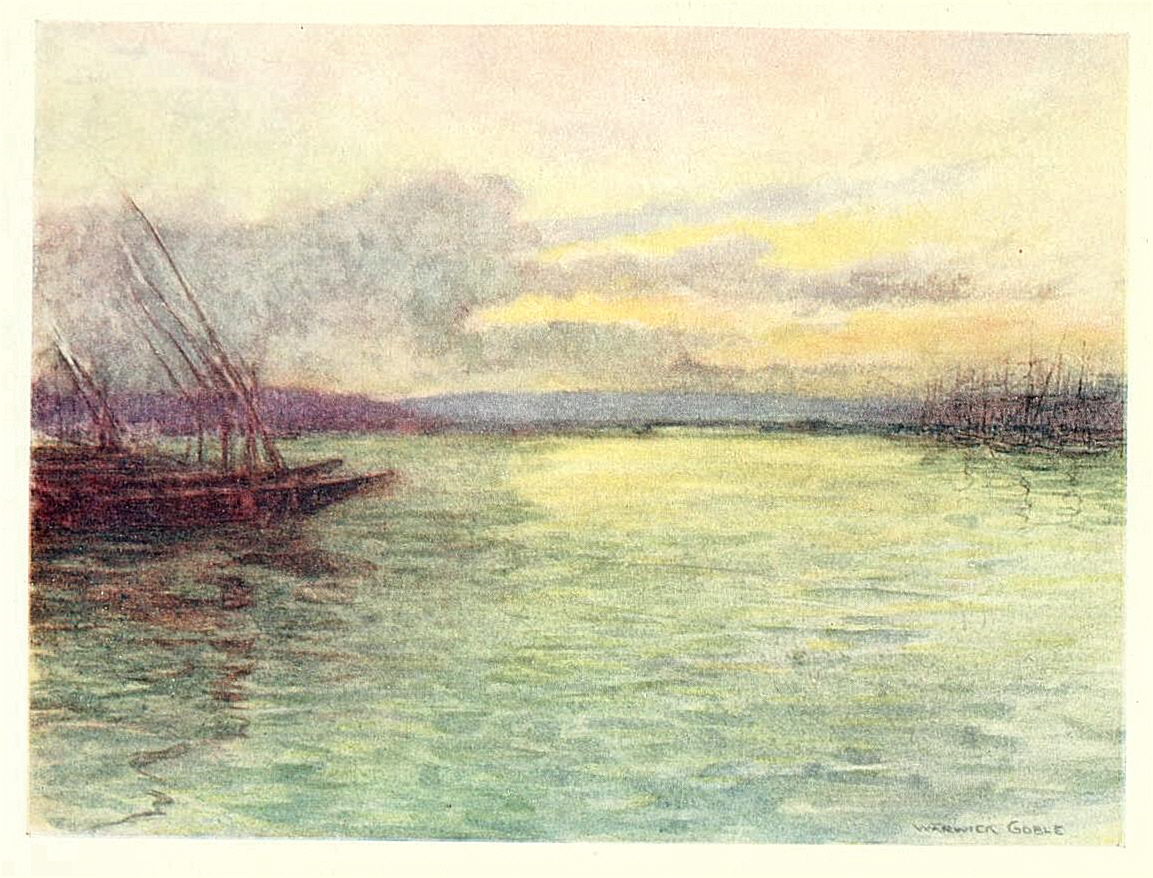
 Golden Horn after Sunset

 The Walls; the Tower of Isaac Angelus

 Constantinople and Golden Horn from the Cemetery at Eyoub

 View from an old Cemetery

 Market in the Court of the Mosque of Sultan Ahmed I.

 Court of the Suleimaniyeh

 Interior of  S. Sophia

 Interior of S. Sophia, the Sultan's Gallery

 Fountain in S. Sophia

 A Wet Day on the Galata Bridge

 In the Grand Bazaar

 A Fortune-Teller

Street Scene, Top-Khanch

 A Step Street

 Simit-Seller

 Market at Scutari

 Entrance to a Turkish Khan

 Turkish Well, Stamboul

 A Fountain by the Bosporus
 
 Open Air Café, Stamboul

 Roumeli Hissar

 A Howling Dervish

 A Whirling Dervish

 Tomb in Scutari

 The Sweet Waters of Europe

 The Yashmak

The Sweet Waters of Asia

Sonntag, 22. Februar 2015

Max Klinger: Intermezzos, Opus IV

Max Klinger: Intermezzos, Opus IV  (Intermezzi, Opus IV) was first published 1881.
The Opus IV offers a diverse selection of amusements, like brief comedic interludes at the opera. The portfolio highlights the capriciousness of life and includes a sequence of four prints on the mythological lives of centaurs, four prints based on Hans Jakob Christoph von Grimmelshausen's seventeenth-century tale The Adventurous Simplicissimus, and four individual compositions further elaborating Klinger's favored themes of desire, death, and fantasy. The twelve prints vary in size and format, but all reveal sublime vistas and demonstrate Klinger's mastery of the vocabulary of Romantic landscapes and lessons he learned through studying Japanese prints.

Klinger dedicated the portfolio to engraver and art dealer Hermann Sagert, who had encouraged him to disseminate his work more broadly by making prints. It also honors the composer Robert Schumann, whose musical Intermezzi are opus four in his own career.

 Blatt 1 (Plate 1): Bär und Elfe  (Bear and Elf)

Blatt 2 (Plate 2): Am Meer  (By the Sea)

Blatt 3 (Plate 3) : Verfolgter Centaur  (Persued Centaur)

 Blatt 4 (Plate 4): Mondnacht  (Moonlight)

Blatt 5  (Plate 4): Kämpfende Centauren  (Battling Centaurs)

 Blatt 6  (Plate 6): Bergsturz  (Landslide)


 Blatt 7  (Plate 7): Simplici Schreibstunde (Simplicius‘ Writing Lesson)

Blatt 8  (Plate 8): Simplicius am Grabe des Einsiedlers  (Simplicius at the Hermit’s Grave)
                         

Blatt 9 (Plate 9): Simplicius unter den Soldaten ( Simplicius among the soldiers)

 Blatt 10 (Plate 10): Simplicius in der Wald-Einöde (Simplicius in the Wilderness)

Blatt 11 (Plate11): Gefallener Reiter  (Fallen Rider)

Blatt 12 (Plate 12): Amor Tod und Jenseits (Cupid, Death and the Beyond)

Freitag, 20. Februar 2015

Constantinople painted by Warwick Goble, Part 1.

Two weeks ago we presented the illustrations of Warwick Goble's The Book of Fairy Poetry. Constantinople painted by the same artist shows a quite another side of his ability. The first edition was published by A. & C. Black, London, 1906.


Frontispiece
A Turkish Lady in Out-Door Dress

The Quay in Galata

Galata from the Aqueduct of Valens

Stamboul  Beggar

Gypsy Basket-Maker

 A Step Street in Galata

A Flower-Market, Scutari

The Galata Bridge

 A Cemetery by the Bosporus

A Kefedji

 Golden Horn from the Bristish Hospital, Galata

Street Scene, Clay Works

Street Scene, Stamboul

A Village Store at Kavak

Galata Tower from the Bridge

Refugee Huts on the Marmora

 Turkish Delight Factory

 Flower-Sellers

Carpet-Menders

Fruit-Market, Stamboul

Carpet Warehouse

Shoemaker, Stamboul

Street Scene, Roumeli Hissar

 Grand Bazaar, Stamboul

A Blacksmith's Shop

Seraglio Point from "The Stones"

The Seraglio Lighthouse and Scutari

 Interior of the Mosque of Sultan Ahmed I.

Prinkipo (Princes Islands)

Golden Horn, early Morning

The Bridge from Galata